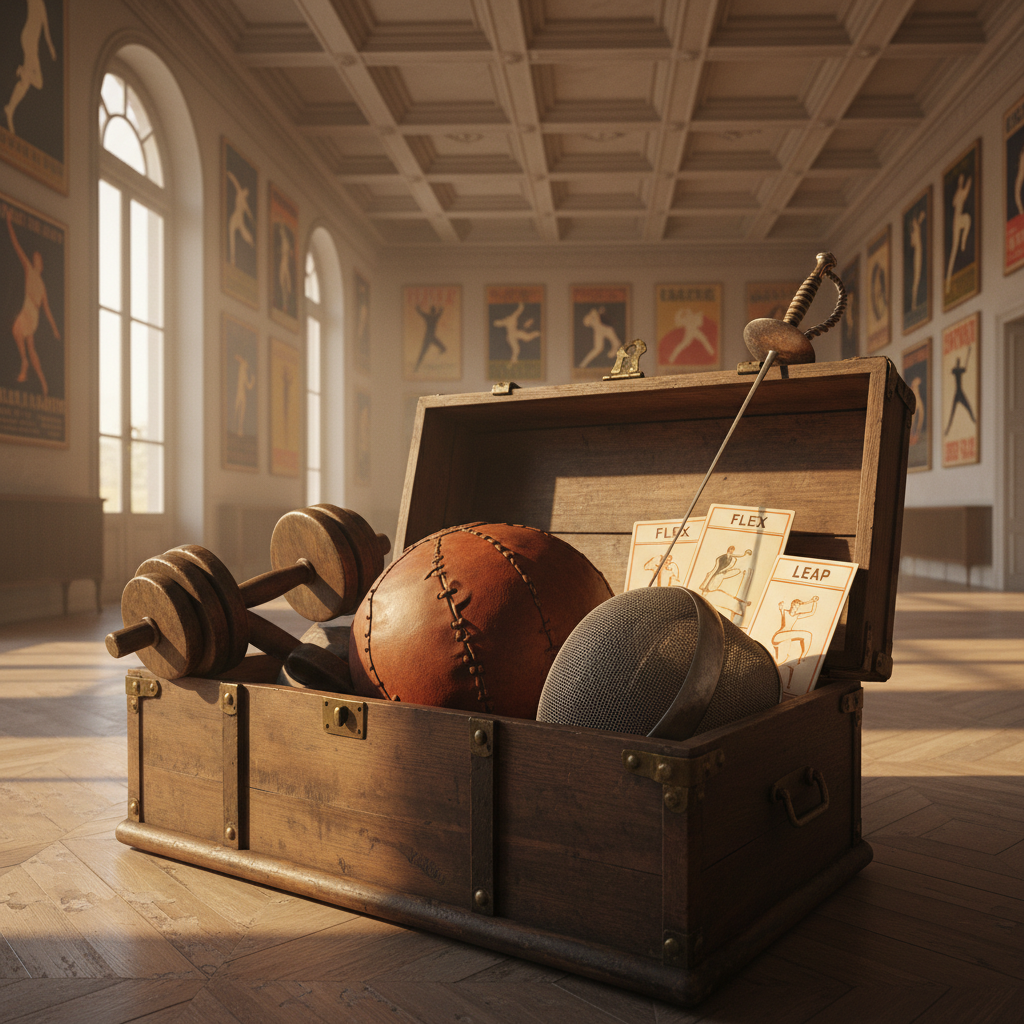
An open, antique wooden chest revealing a curated collection of historical movement tools: polished wooden dumbbells with worn handles, a cracked leather medicine ball, a beautifully patinated fencing mask resting beside a slender, engraved foil, and a stack of illustrated exercise cards with Art Deco styling. The chest sits on aged parquet flooring in a high-ceilinged salon adorned with framed vintage posters of athletic figures reduced to geometric silhouettes. Golden hour light streams through tall windows, bathing the scene in a warm, nostalgic glow and casting diagonal shadows across the objects. Photographic realism with a refined, almost cinematic atmosphere, shot at a three-quarter angle with moderate depth of field, inviting contemplation of how the culture of the moving body has evolved.

Ressources AMHE en mouvement

Ressources pédagogiques sur les Arts Martiaux Historiques Européens et leurs héritages gestuels

AMHE

Nous explorons les Arts Martiaux Historiques Européens comme patrimoine du mouvement humain, pour comprendre, ressentir et transmettre des savoirs gestuels oubliés, tout en offrant des outils pédagogiques concrets aux enseignants, chercheurs et pratiquants d’aujourd’hui.
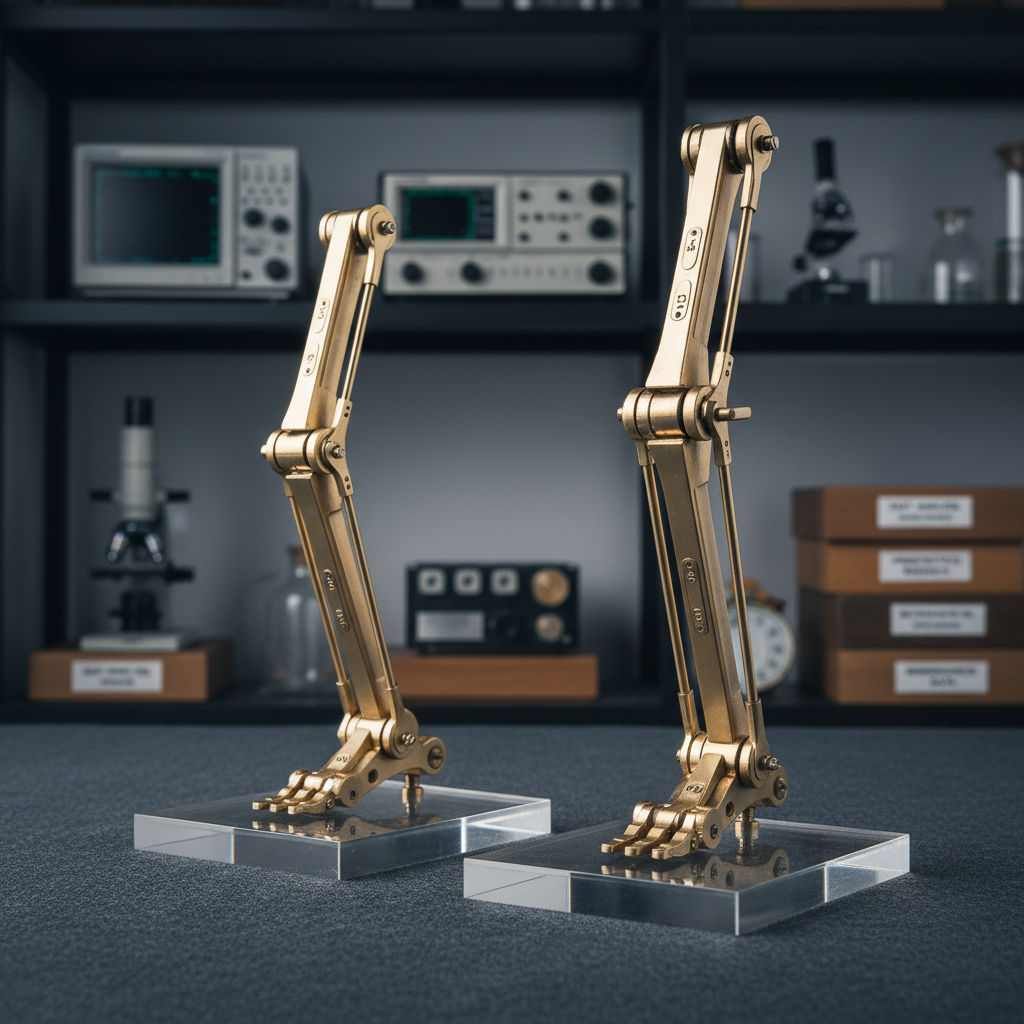
A pair of finely engineered mechanical models demonstrating the gait cycle: two articulated brass and brushed-steel leg assemblies mounted on clear acrylic bases, their joints connected by precisely numbered rods and tiny engraved plates. They rest on a charcoal-grey felt surface in a modern research laboratory, with blurred shelves of scientific instruments and neatly labeled archival boxes in the background. Cool, even studio lighting illuminates every hinge and screw, creating crisp reflections along metal edges and subtle gradients across the surfaces. Photographic realism with a clean, analytical mood, captured from a low, close-up angle, shallow depth of field emphasizing the foremost mechanism, visually translating the history of studying human movement into elegant mechanical form.
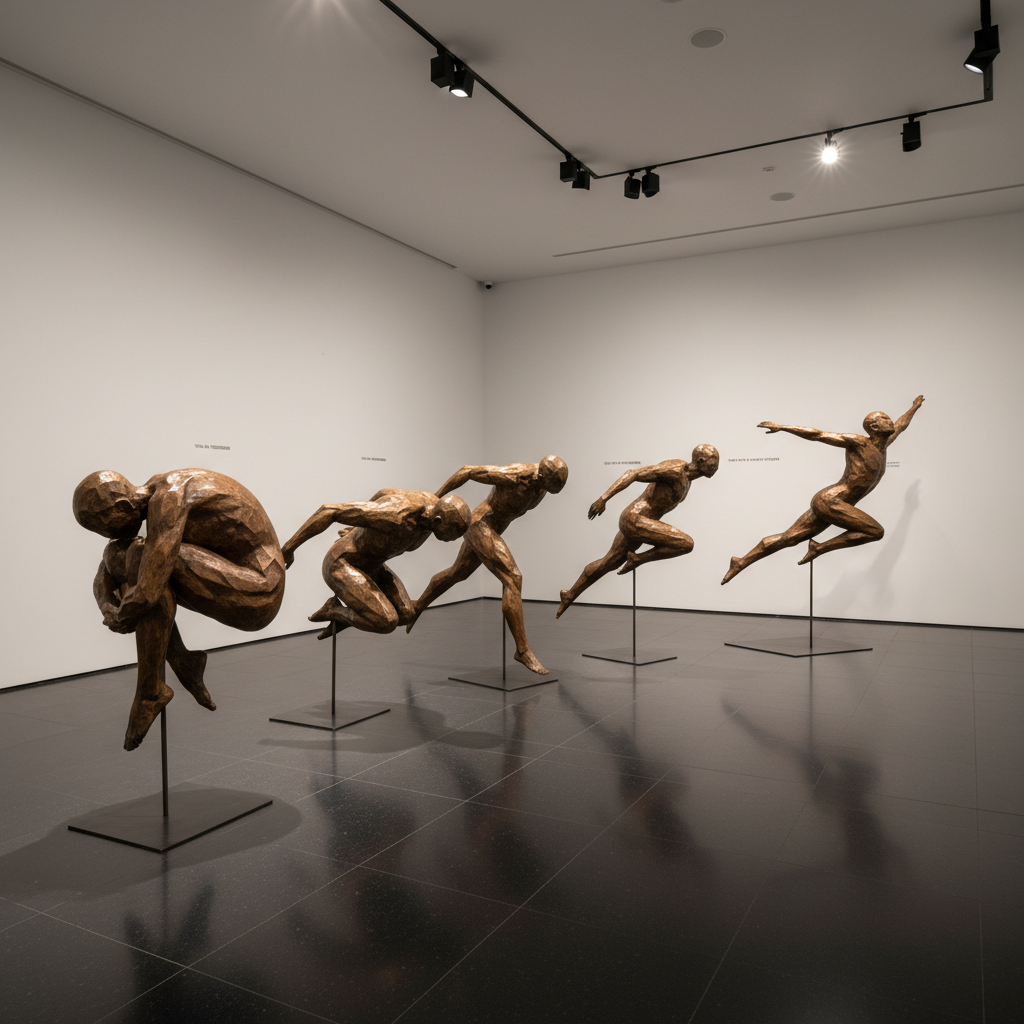
An exquisitely crafted sequence of bronze sculptures, each representing a different phase of a single fluid human movement, reduced to abstract, faceted forms without facial detail. The sculptures are arranged in a gentle arc on a polished basalt floor within a minimalist gallery space, white walls punctuated by discrete plaques of historical dates. Overhead track lighting creates refined pools of soft, directional light, accentuating the metal’s patina and casting overlapping shadows that visually narrate motion through time. Photographic realism with a calm, contemplative atmosphere, captured from a slightly elevated three-quarter angle, deep focus revealing subtle surface textures and precise spacing between figures, evoking the evolution of knowledge about the human body in motion.